When domestic workers in Philadelphia began hearing more stories about immigration raids, the presence of ICE agents, and families avoiding certain public places out of fear, many grew increasingly concerned about how these situations might affect their and their neighbors’ daily lives.
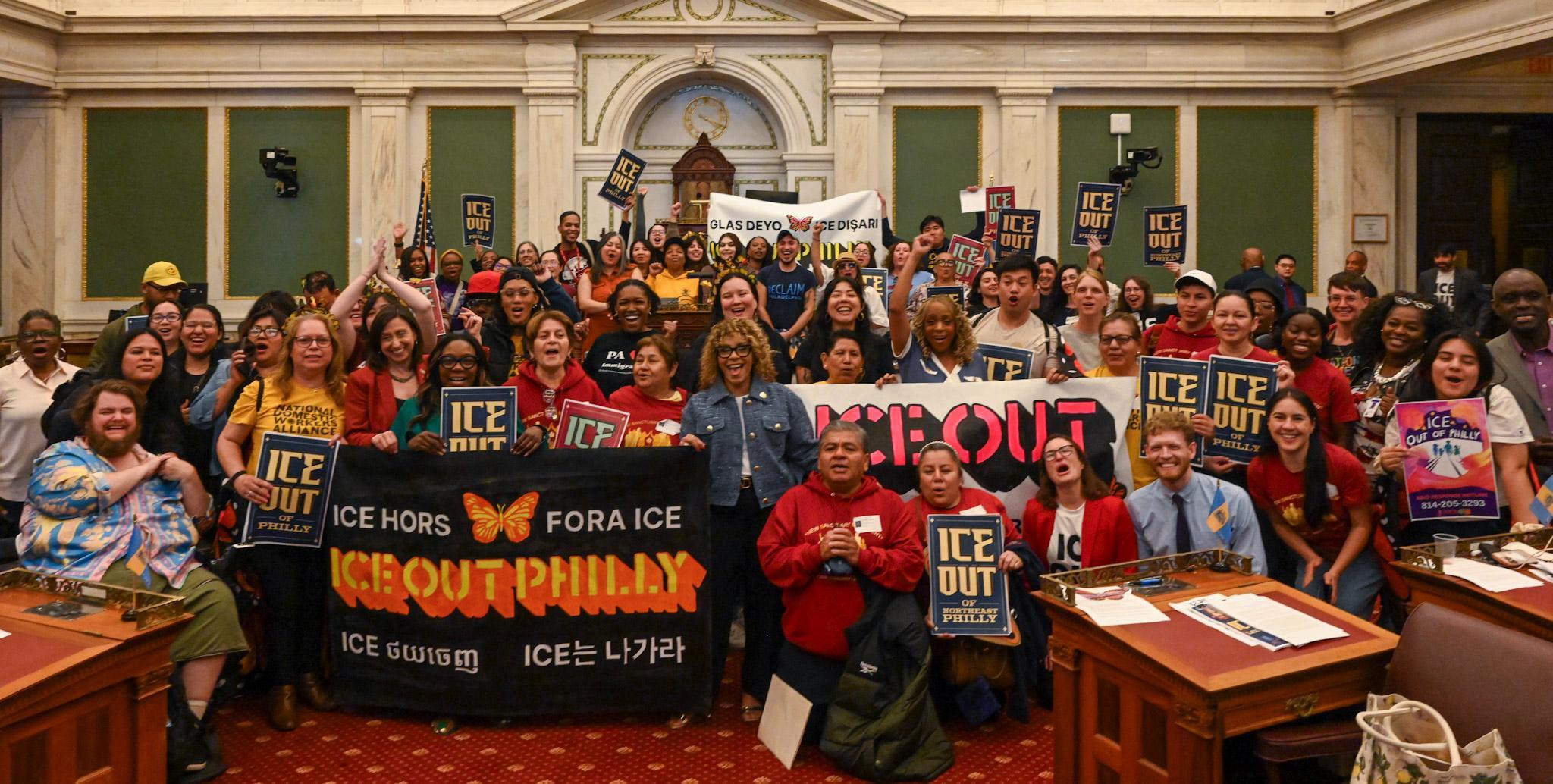
Months later, some of these same workers would go before Philadelphia’s City Council to advocate for legislation to strengthen protections for immigrant communities.
That legislation, known as ICE Out, was passed in record time this year by the City Council.
Among other measures, it limits collaboration between municipal agencies and federal immigration authorities, protects personal information of immigrant residents, and restricts use of city resources to support immigration enforcement activities.
It all began with a shared concern
Late last year, the Pennsylvania chapter of the National Domestic Workers Alliance joined a coalition led by the Pennsylvania Immigration Coalition to foster initiatives protecting immigrants in the state.
This effort brought about the idea to promote municipal legislation in Philadelphia that would limit collaboration with federal immigration agencies.
According to Aurora Muñoz, the chapter’s organizer, workers were hearing growing concern in their communities and were ready to make their voices heard.
For domestic workers, these concerns were neither abstract nor remote. They were part of daily life.
Many of these workers are immigrants, many work alone in private homes, many are mothers, and many know people whose lives have been upended by enforcement of immigration laws, Muñoz explained.
That is why, when the coalition began developing the campaign, workers did not merely participate as attendees or individuals affected by the legislation; they helped bring the human impact of immigration-related fear into the open, mobilizing other workers to attend public events, sharing their stories with city council members, and highlighting how immigration policies affect everyday life and domestic work.
Muñoz says their stories helped translate a legislative proposal into concrete experiences that officials and the city could understand: the fear of going to a library or a medical appointment, or of reporting workplace abuse.
Furthermore, their constant presence at press conferences, hearings, and votes demonstrated that the campaign was not merely an initiative driven by organizations, but a demand directly supported by affected immigrant communities.
Note: The National Domestic Workers Alliance is a partner organization of La Alianza.
Fear has real consequences
Lilia, a leading member of the National Domestic Workers Alliance in Philadelphia, has lived in that city for 23 years and has worked as a housecleaner for 18 years. She was one of the workers who joined the campaign, using her testimony to raise awareness about situations facing the immigrant community.
“Fear affects us mentally and financially, and impacts our children’s education. People are afraid to go to work, to school, or to buy groceries,” she told the audience during one of the campaign events. “Our city must say that this is not right. We all have the right to live with dignity and respect, without fear, because we are human beings and part of this community.”
Many domestic workers also know that fear has another, less visible effect: it silences abuse.
“This fear also means that workers do not stand up for their rights or report workplace abuse, and it empowers abusive employers, who can use the threat of an ICE raid to exploit immigrant workers,” said Sandra, a native of Jamaica who has been working as a housecleaner and caregiver for 15 years.
Her testimony helped shine a light on something that immigrant organizations know all too well: the fact that labor rights and immigrant rights are often deeply intertwined.
That is why Sandra framed the discussion in terms of safety for the entire community:
“ICE makes all our workplaces and communities less safe.”
What happens before someone takes the microphone
One of the most important aspects of the campaign was the public participation of immigrant workers at a time when many people prefer to stay out of the public spotlight.
But behind every appearance were months—and in some cases years—of organizing work, Muñoz told La Alianza.
“[It’s about] building a relationship based on respect and transparency,” she explained.
According to the organizer, workers openly discussed the risks and different ways to participate. Some attended meetings. Others went to public events. Some met with city council members in less visible settings. And others decided to share their stories publicly.
The key was for each worker to be able to make an informed decision.
“Many said, ‘I will give my name,’ because they were ready to or fed up with someone else speaking for them.”
The Power of a Coalition
Aurora acknowledges that the coalition’s work was essential to turning a community concern into a viable legislative proposal.
While some organizations contributed legal expertise, others had relationships with public officials or the ability to mobilize whole communities.
But the benefit wasn’t just strategic. It was also emotional. Many workers gained confidence when they saw that they weren’t facing these challenges alone.
“We always say that the way to fight fear is through unity and in coalition with others.”
What other workers can learn from this experience
Although the legislation passed in Philadelphia, organizers believe lessons from the campaign can be applied in any city.
Muñoz advises workers who are interested in political organizing but don’t know where to start to attend a meeting of a local organization, learn how local institutions work, and understand that political decisions also affect the daily lives of domestic workers.
“It’s very important to always belong to an organization because that’s where [you gain] skills and training…and when you’re ready to tell your story, [remember that] we all have a story that can help change the minds of decision-makers and also guide legislative proposals.”
Editor’s note: This article was originally written in Spanish and translated into English by Tilde Language Justice Cooperative