
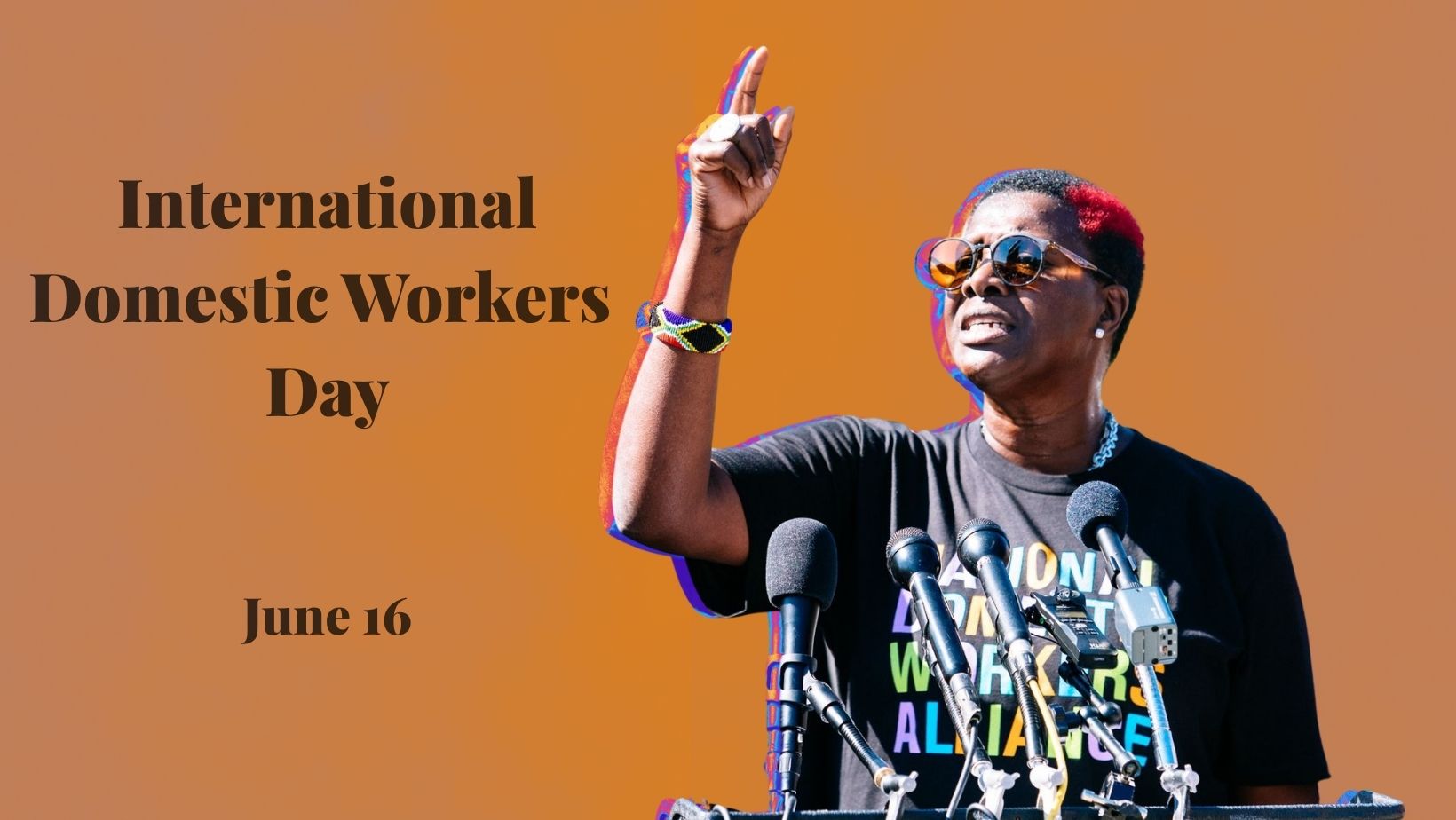
To celebrate International Domestic Workers’ Day, recognized every June 16, Allison Julien, Director of We Dream in Black, spoke with June Barrett, leader of the National Alliance of Domestic Workers (NDWA) and North American representative on the Executive Committee of the International Federation of Domestic Workers (FITH).
Note: The National Alliance of Domestic Workers is a partner organization of La Alianza
From the homes where June began working as a caregiver to the international negotiating rooms in Geneva, June has dedicated much of her life to defending the rights of domestic workers.
With over twenty years of experience in the sector and a decade of leadership within the movement, June now represents North America in the International Federation of Domestic Workers (FITH), a global organization that brings together unions, associations, and organizations of domestic workers to promote the recognition of their labor and human rights.
The conversation took place during the International Labour Conference (ILC), held in Geneva, Switzerland, which FITH members attended earlier this month. At this event, governments, employers, and workers from around the world gather to discuss global labor standards and policies.
This year holds special significance for the domestic workers’ movement, as it marks the fifteenth anniversary of the adoption of Convention No. 189 of the International Labour Organization (ILO), which was adopted in 2011.
This historic agreement recognizes domestic work as decent work and establishes minimum standards of labor protection for millions of domestic workers worldwide. Since then, more than 40 countries have ratified the convention, although the struggle for its implementation continues.
However, the United States has yet to accede to this international instrument, considered one of the greatest advances in the protection of domestic workers’ rights.
In this interview, June Barrett reflects on the progress of the global movement, the challenges that persist, and the importance of continuing to organize.
“Domestic workers have taken Geneva”
Allison: You’re in Geneva as part of the FITH delegation for the International Labour Conference. You’re meeting with workers, governments, and employers from around the world, right in the historic place where Convention 189 was adopted fifteen years ago. How does it feel to be there?
June: “It is an honor to be here as a domestic worker. Seeing colleagues from every continent gathered in one place is incredibly powerful. Domestic workers are present in the negotiation rooms, participating in meetings, engaging with governments, and defending our rights.
We are here to remind governments that they must ratify and implement Convention 189, and to ensure that the decisions made include the voices of those of us who do this work. Domestic workers have taken over Geneva, and that shows just how much our movement has grown.”
The Movement’s New Struggles
Allison: What are some of the main issues being discussed this year at the International Labour Conference, and why is it important for domestic workers to participate in those conversations?
June: “Often, when people talk about platform work, they think only of drivers or [food] delivery workers. But there are also domestic workers who find employment through apps and digital platforms. Some have faced abuse, violence, and precarious working conditions. That’s why it’s essential that our experiences be part of these discussions.”
“Domestic workers must be present in these conversations because our stories matter. It is our experiences that help drive real change.”
Fifteen Years After Convention 189
Allison: This year marks the 15th anniversary of Convention 189. What do you think the global movement of domestic workers has achieved since that victory in 2011?
June: “More than 40 countries have ratified Convention 189, and that is a huge victory. But the struggle doesn’t end with ratification. We need governments to implement the laws and ensure that rights are upheld in practice.”
“Uruguay has shown that it is possible to guarantee domestic workers the same rights and protections as other workers. That example continues to inspire movements around the world.”
“Domestic workers are now visible. They are powerful. They are sitting across from presidents, ministers, and dignitaries… If they don’t give us a seat at the table, we’ll bring our own chair and sit down anyway. There can be no discussions about domestic workers without domestic workers.”
Organization and Resistance Around the World
Allison: Can you share some stories about how domestic workers are organizing in other regions?
June Barrett: “One of the most important developments this year comes from Indonesia. After many years of organizing, domestic workers are now officially recognized as formal workers and no longer considered part of the informal economy.”
“In Lebanon, where conditions for organizing are much more difficult, workers continue to build mutual support networks even amid crisis and conflict…Many workers have been displaced or have lost their livelihoods, but they continue to look out for one another, organize, and fight for their rights. Their courage is extraordinary.”
A Message for Domestic Workers
Allison: As we prepare to celebrate International Domestic Workers’ Day 2026, what message would you like to share with NDWA members?
June Barrett: “Ten years ago, I didn’t know my rights as a domestic worker. It was thanks to the movement that I understood we deserve respect, protection, and dignity.”
“My message is simple: don’t give up. Keep inviting more workers to join us. Victories don’t happen overnight. Convention 189 took years of struggle. The laws we’ve won took years too… But when we organize, we’re stronger. And I know we’re going to keep winning.”
Editor’s note: This interview has been edited and summarized. The responses have been condensed while preserving the original meaning and message of the conversation.
The article was originally written in Spanish and translated into English.