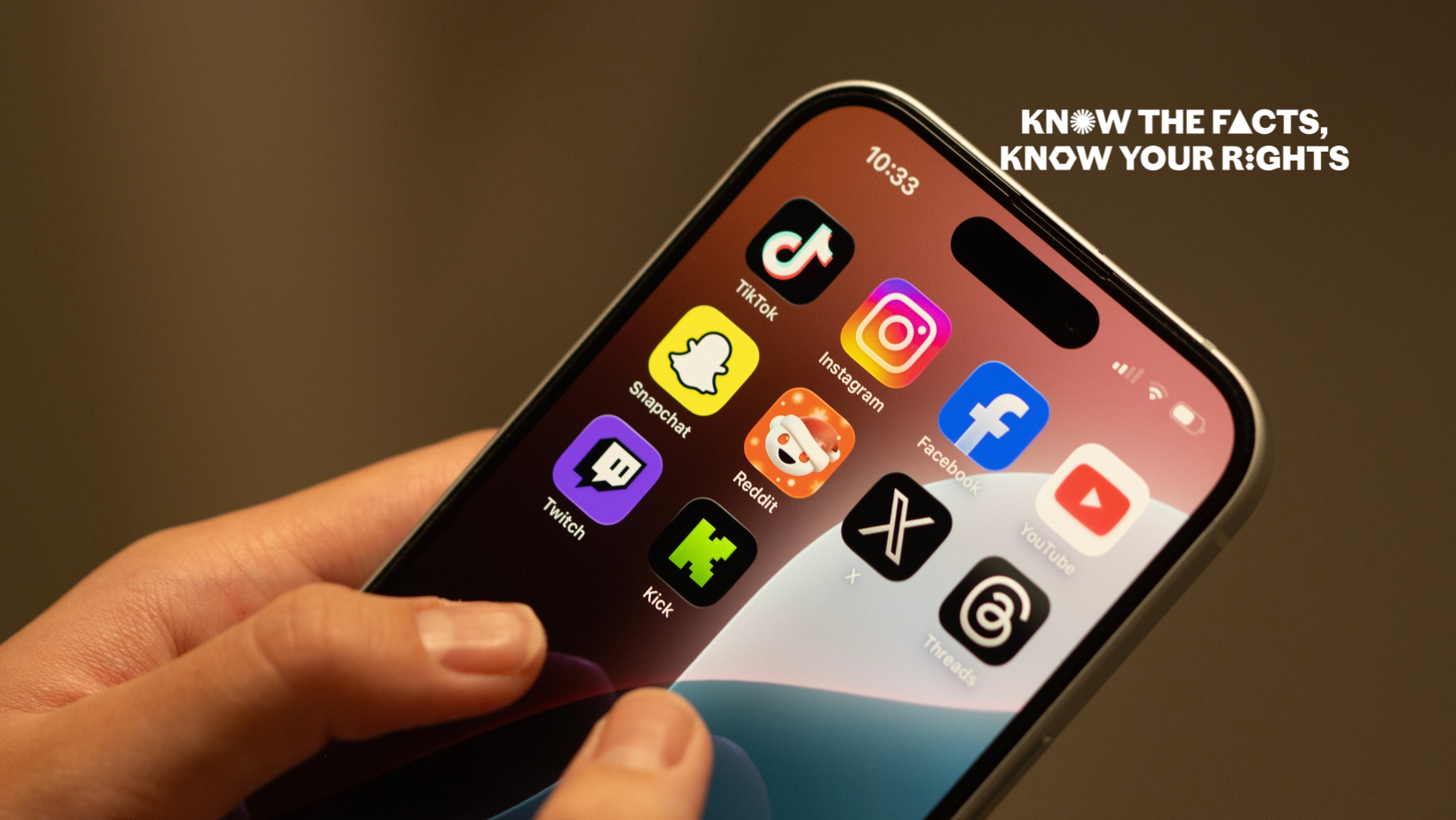
Last February, the U.S. Citizenship and Immigration Services approved a rule allowing the agency to collect social media usernames from immigrants applying for immigration benefits.
According to the government, the goal is to verify identities and assess whether granting these benefits could pose risks to public safety. The rule is expected to remain in effect at least through 2027.
This type of monitoring is not entirely new. Since 2019, the U.S. Department of State has required social media identifiers in most visa applications to detect immigration fraud.
However, the rule has renewed concerns because it involves broadly collecting and reviewing information from many people, not just in specific cases.
Unlike in the past, when social media was reviewed in targeted situations, there are now concerns about more widespread surveillance of immigrants.
Who is affected
The policy impacts approximately 3.4 million immigrants each year. The forms that require this information include:
- Citizenship
- Permanent residency (green card)
- Asylum
- Travel documents
- Advance permission to enter as a nonimmigrant
- Adjustment of status
- Refugee classification
- Refugee/Asylee relative petitions
- Investor petitions to remove conditions on permanent residence
How social media content is analyzed
USCIS officials and consular staff may review social media to verify that the information in an application is credible. This use is not limited to identifying criminal activity.
This includes checking whether what a person posts online matches what they declared in their forms and identifying content that could raise doubts or contradict their version of events.
The government may analyze public content to:
- Detect inconsistencies with an application
- Examine personal relationships, especially in family-based cases
- Identify possible employment activity by reviewing platforms like LinkedIn
- Evaluate an applicant’s behavior or “character” through posts and interactions
- Detect links to terrorist organizations, extremist views, or threats to public safety
- Identify immigration violations, such as posts suggesting unauthorized work
When a post can become evidence
USCIS has stated that it may use publicly available social media information to support its review and decision-making process.
If the agency determines that a post is relevant and contradicts what a person declared—or raises questions about eligibility—that information can weigh on the case and even contribute to a denial.
Critics warn that one of the main risks lies in how online content is interpreted.
It is not only posts about illegal activity that may be considered, but also inconsistencies, ambiguities, and content taken out of context.
In this sense, sarcasm, humor, or even minor contradictions can be misinterpreted and end up affecting an entire case.
Freedom of expression under pressure
This rule is linked to Executive Order 14161, which instructs agencies to strengthen immigration vetting processes and identify potential risks, including “hostile attitudes” or “hateful ideologies.”
The problem, experts say, is that these terms are broad and ambiguous. This opens the door for political opinions, criticism of the government, or cultural expressions to be interpreted as negative signals.
Organizations such as the Brennan Center for Justice warn that these policies could affect fundamental rights by allowing immigration decisions to be based on protected expression, such as freedom of speech.
Beyond individual cases, one of the most significant effects is how this policy may influence people’s behavior.
Experts have warned that it could create a “chilling effect,” meaning people may avoid expressing themselves freely out of fear of harming their immigration case. In practice, this may lead to:
- Avoiding political discussions
- Not sharing critical opinions
- Limiting interactions on social media
For many immigrants, this means constantly deciding what to say—and what not to say—in digital spaces.
Public social media content has limited privacy protections within immigration processes.
Additionally, even if a post is deleted or made private, that does not guarantee it disappears completely. Organizations that study digital surveillance note that such content may have already been archived or captured, expanding the real scope of monitoring.
Tips for managing your social media
Organizations such as Boundless and The Employment Law Worldview recommend:
- Set your accounts to private and control who can see your content
- Review and delete old posts that could be controversial (keeping in mind they may still exist elsewhere)
- Avoid posting, reacting to, or following content that could be misinterpreted as violent, offensive, or problematic
- Make sure your posts match the information in your application
- Use clear language and avoid sarcasm, jokes, or ambiguous expressions
- Do not use false names or information on your profiles
- Remember that even private messages can be shared
- Do not accept requests from people you do not know
- Search your name online and review what appears
Depending on your case:
- Family-based cases: Ensure your relationship appears clear and consistent online and avoid interactions that may raise doubts
- Work-based cases: Verify that your work history on social media matches your application and be cautious about posts related to informal work or additional income
Avoid especially:
- Posts with aggressive language, threats, or insults
- Content that contradicts your application
If you have doubts:
- Before posting, consider how someone unfamiliar with your context might interpret it
- Consult an immigration attorney before making decisions about your case
Where to find help and more information
If you have questions about your immigration case or how to manage your social media during the process, these resources may help:
Trusted legal help
Note: The National Domestic Workers Alliance is a partner organization of La Alianza.
Information on social media and immigration
- Boundless – Social media and immigration guide
- Brennan Center for Justice
- Immigrant Legal Resource Center
- Infographic: DHS and Social Media Monitoring by Luis Romero/Novo Legal Group
Disclaimer: This article is not intended to provide legal advice. It is recommended to seek legal advice from a legal professional.
You may also be interested in:
Editor’s note: This article was originally written in Spanish and translated into English.