
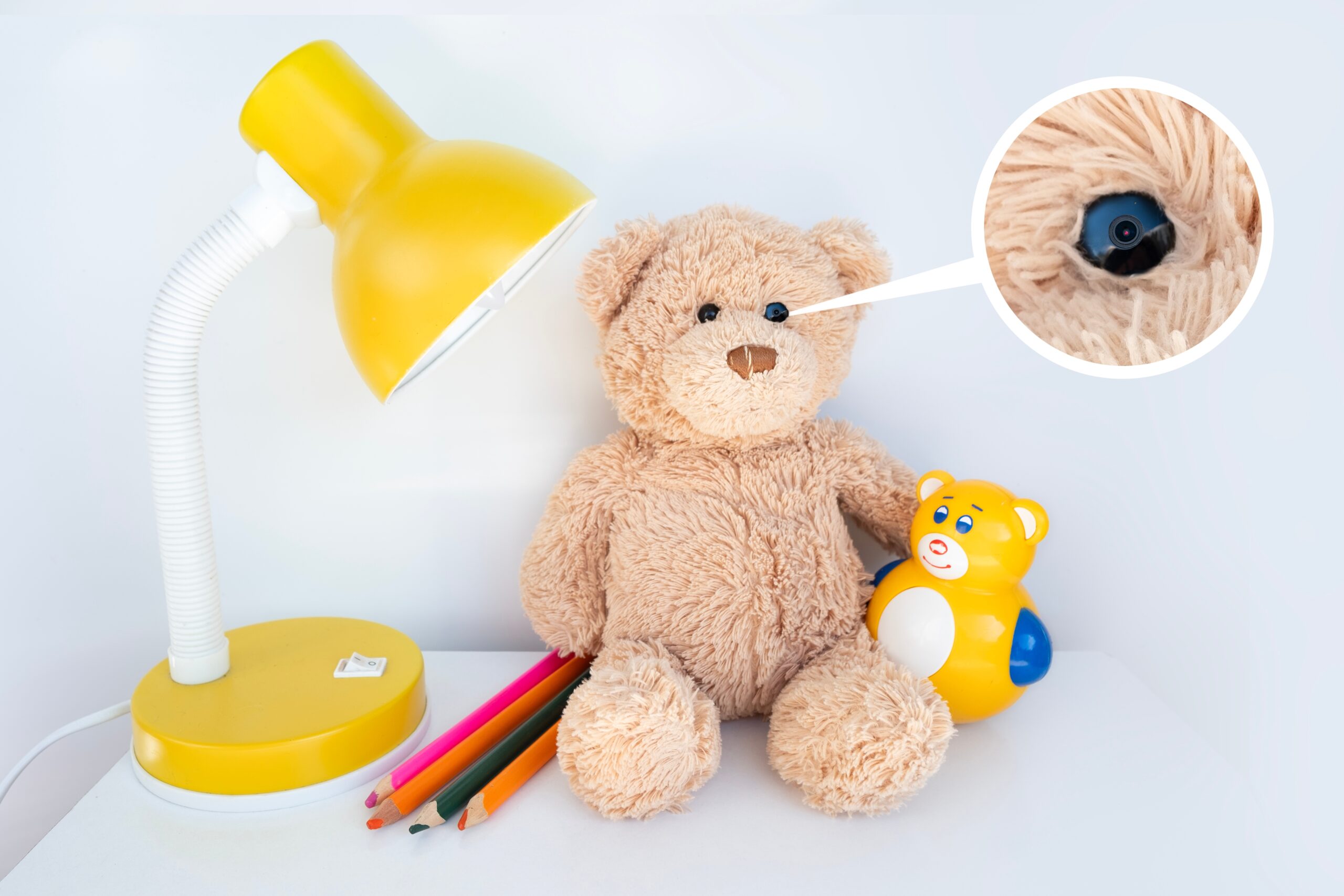
When Linda started working as a nanny for a family, they told her there were two cameras in the house. She had no problem with that. She understood that the parents wanted to protect their children and keep an eye on their home when they were away. But over time, she discovered that the surveillance was much more extensive than she had been told.
“We’re being watched from the moment we walk in until the moment we walk out,” she said during a conversation among a group of domestic workers who meet regularly to discuss current issues related to domestic work.
Her experience reflects an increasingly common reality. According to a recent report by the organization SafeHome, nearly 75 million U.S. households already have security cameras, making them the most popular home security device in the country.
But as the market grows and the technology becomes more accessible, so does the debate over what it means to work inside a home where every move can be recorded.
Security for some, peace of mind for others
Not all female workers see the cameras as a threat. Andrea, who has been cleaning houses for years, says that for her, they represent a form of protection.
“I’ve often found wads of cash, so I think, if there are cameras, I feel safe, because I can say: the money was here; I moved it to clean, but it’s still there. That gives me peace of mind.”
Her opinion is shaped by an experience she still recalls with outrage. Years ago, a family accused her children when some jewelry went missing while they were accompanying her to work during a school break. They called the police and filed a report. Days later, they found the jewelry behind a mirror.
“That hurt me so much… If there had been cameras, they would have known from the start that my children weren’t responsible.”
Lizbeth, who works as a nanny, believes that surveillance systems are a reasonable tool for many families.
“When they don’t know you—even if you have references—they don’t know who you are. It makes sense that the first few times you provide a service, they’ll be keeping a close eye on you to get to know you better and see who you are.”
Many workers believe that cameras serve precisely to demonstrate that they’re doing their job well and to protect them from unfair accusations.
In a discussion in a Facebook group for nannies, most agreed that they don’t mind having cameras at work, as long as they aren’t hidden and employers inform them of their presence from the start of the employment relationship.
An Employment Relationship Based on Distrust
However, for some domestic workers, the problem isn’t the existence of the cameras, but what they represent.
“If you don’t trust me enough to let me clean your house, then I’m sorry, I can’t clean your house,” said Eunice, a live-in caregiver with more than twenty years of experience.
Eunice says she has never worked in a home with visible cameras and would prefer not to.
“We don’t know how the recorded videos might be used,” she said.
Her concern is not unfounded. In most states, recording video using security cameras inside the home is legal without prior consent, as long as the devices are not installed in spaces where people have a reasonable expectation of privacy, such as bathrooms or bedrooms. However, laws regarding audio recording are generally more restrictive and vary by state.
In addition, some states have enacted Domestic Workers’ Bill of Rights that include privacy protections, including Massachusetts, Virginia, and Connecticut,
However, privacy and labor rights experts point out that there is a difference between what is legal and what is ethical. Organizations such as Hand in Hand, the network of domestic workers’ employers, recommend that employers clearly inform workers about the location of the cameras and how the recordings will be used.
However, several workers reported instances in which they were unaware that they were being recorded or how the recorded material was being used.
The Fear of Hidden Cameras
Several years ago, Adriana worked as a live-in caregiver for a family. She knew there were cameras set up to monitor the elderly man she was caring for. What she didn’t know was that there were also cameras in the room where she slept and in the bathroom where she bathed.
According to her account, the man who employed her ended up misusing those recordings and later attempted to abuse her.
“I was horrified by the cameras,” she said. “I feel nervous when I see them, and I wonder how they’re using what they see.”
However, the cameras have also been useful to her in some circumstances, such as when the elevator in the building where she worked crashed while she was inside. The footage of the incident served as evidence for her to file a claim for the accident.
Flor, who works as both a nanny and a house cleaner, says that the use of Ring cameras has become much more common among her clients. “Any movement you make or anything they see—they call you right away,” she said. Like most of her colleagues, she doesn’t mind the cameras, but she’s concerned that these recordings might end up “in the hands of people with problems or bad intentions.”
Artificial intelligence adds a new concern
Advances in artificial intelligence are also raising new concerns among domestic workers, as cameras no longer just record—many now incorporate motion detection, cloud storage, and automatic alerts, among other features.
“AI has advanced so much that even if you haven’t touched anything, they can manipulate that video and say that you did,” Eunice said.
Digital privacy experts warn that domestic workers are in a particularly vulnerable position within smart homes.
A recent study on domestic workers in homes equipped with smart technology found that constant surveillance can disrupt working relationships, limit workers’ autonomy, and create uncertainty about who controls the collected data.
The concern is not limited to employer surveillance. Various researchers have also warned about security vulnerabilities in hidden cameras and internet-connected home devices, which can expose private recordings to third parties.
Between Safety and Trust
The conversation made it clear that there is no single stance among domestic workers. Some view the cameras as a protective tool that documents reality and helps build trust. Others feel that constant surveillance introduces a level of stress that is incompatible with privacy and dignity at work.
What they do share is a common concern: the lack of clarity regarding boundaries.
“When I talk to my employers, I tell them I’m not opposed to cameras. I know how I work, and this way you’ll be able to see the results of my work. But I would like to know where they are,” Adriana said. “I make that clear when we sign a contract. But many of my colleagues don’t have the opportunity to ask.”
The article was originally written in Spanish and translated into English.