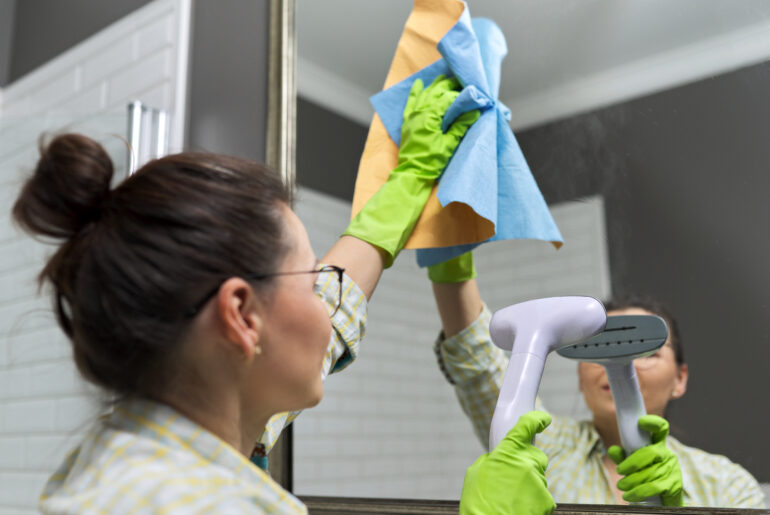

During this spring cleaning season, it is important to keep in mind that many cleaning products contain potentially dangerous ingredients. Chemical manufacturers are not required to list ingredients on their packaging or make them public, which means it is often impossible to know what you are spraying or rubbing on when cleaning.
These products are particularly harmful to domestic workers, who are more frequently exposed to these chemicals, which enter the body through inhaling, skin contact, and even hand-to-eye or hand-to-mouth contact.
Some cause acute allergic reactions, while others are associated with chronic or long-term effects, such as asthma and cancer.
To help reduce exposure to these products, the Environmental Working Group (EWG), an organization focused on protecting environmental health, has published a list of tips on how to switch to healthier cleaning products.
Avoid antibacterial or antimicrobial cleaners: Instead, use soap and water with damp microfiber cloths for everyday cleaning tasks.
Disinfectants, as these products are known, often contain quaternary ammonium compounds (QACs) or chlorine bleach, which have been linked to skin irritation, asthma, and other lung problems.
When there is a serious risk of disease transmission, you may consider antimicrobial disinfectants registered with the Environmental Protection Agency (EPA).
Avoid air fresheners: Open windows if the weather permits and change HVAC filters regularly. You can also simmer water with citrus peels, vanilla, or cinnamon sticks for an hour to freshen indoor air.
Air fresheners usually contain phthalates, chemicals that can cause hormonal imbalances, reproductive abnormalities, and even birth defects, according to the Natural Resources Defense Council (NRDC).
Avoid drain cleaners: Consider using a drain snake instead of harsh chemicals.
According to the United States National Library of Medicine, drain cleaners contain very dangerous chemicals that can be harmful to your health if ingested or inhaled, or if they come into contact with skin or eyes.
Avoid fabric softeners: Try a reusable dryer ball instead of fabric softeners that contain harmful chemicals.
Rich Handel, a test project leader at Consumer Reports and a laundry expert, advises against using fabric softener because “not only can it irritate sensitive skin, but it can also leave a layer of residue on your clothes and reduce the absorption of your towels.”
Read the label and avoid these chemicals
Scientific studies have shown that chemicals found in some common cleaning products cause cancer, birth defects, asthma, and other serious health effects. Even cleaning products advertised as “green” or “natural” may contain ingredients that can cause health problems, according to the EWG.
In addition to choosing products that have a complete list of ingredients on the label, it is important to avoid those that contain “fragrance,” “perfume,” or “aroma,” as these terms can hide a combination of harmful chemicals.
EWG also recommends being cautious with products containing ammonia, 2-butoxyethanol, chlorine bleach, ethanolamines, QACs, triclosan, and thiourea, as these have been linked to various health risks.
In this article, only available in Spanish for now, we tell you more about how these chemicals can affect your health.
The United States Environmental Protection Agency has a complete list of products that carry the “Safer Choice” label, which certifies that the product is made with safer ingredients and has passed strict quality controls, although this is not a guarantee that the product is 100% safe.
Editor’s note: This article was originally written in Spanish and translated into English by Tilde Language Justice Cooperative